Note: This is a live gallery. It evolves with me — paragraphs may shift, sections may grow, details may sharpen. If you return, expect changes.
⚠️ EXPERIMENTAL ART EXPRESSION — WARNING These are contemplative, non-linear works — meant to be felt as much as understood. Meaning emerges through patterns and resonances rather than sequential explanation, and multiple readings may coexist without contradiction. As art, it lets those readings stand together; as inquiry, it claims no immunity from being wrong — where it makes a claim about the world, that claim is meant to be tested, challenged, refined, and abandoned where it fails. Slow down and let the connections form on their own; and just as freely, bring your analytical and empirical tools to probe the structure and try to break it. What survives that scrutiny is precisely what I most want to keep. If anything here brings you anguish, isolation, or distress, please pause and seek professional support.
Context: All my work — music, books, drawings, paintings, films, etc. — belongs to a single body: The Truth’s Return, a multimedia universe that seeks to bring science and mysticism to the same table. What I make, in the end, is always TR. Three written doors into the same house: for the lived case study of one human life, read A Child’s Paradox; for the architecture that bridges science and mysticism, The Synthesis; for the first working principle that keeps it all grounded, The Joy of Doing.
This is where that universe opens its eyes and looks back at you.
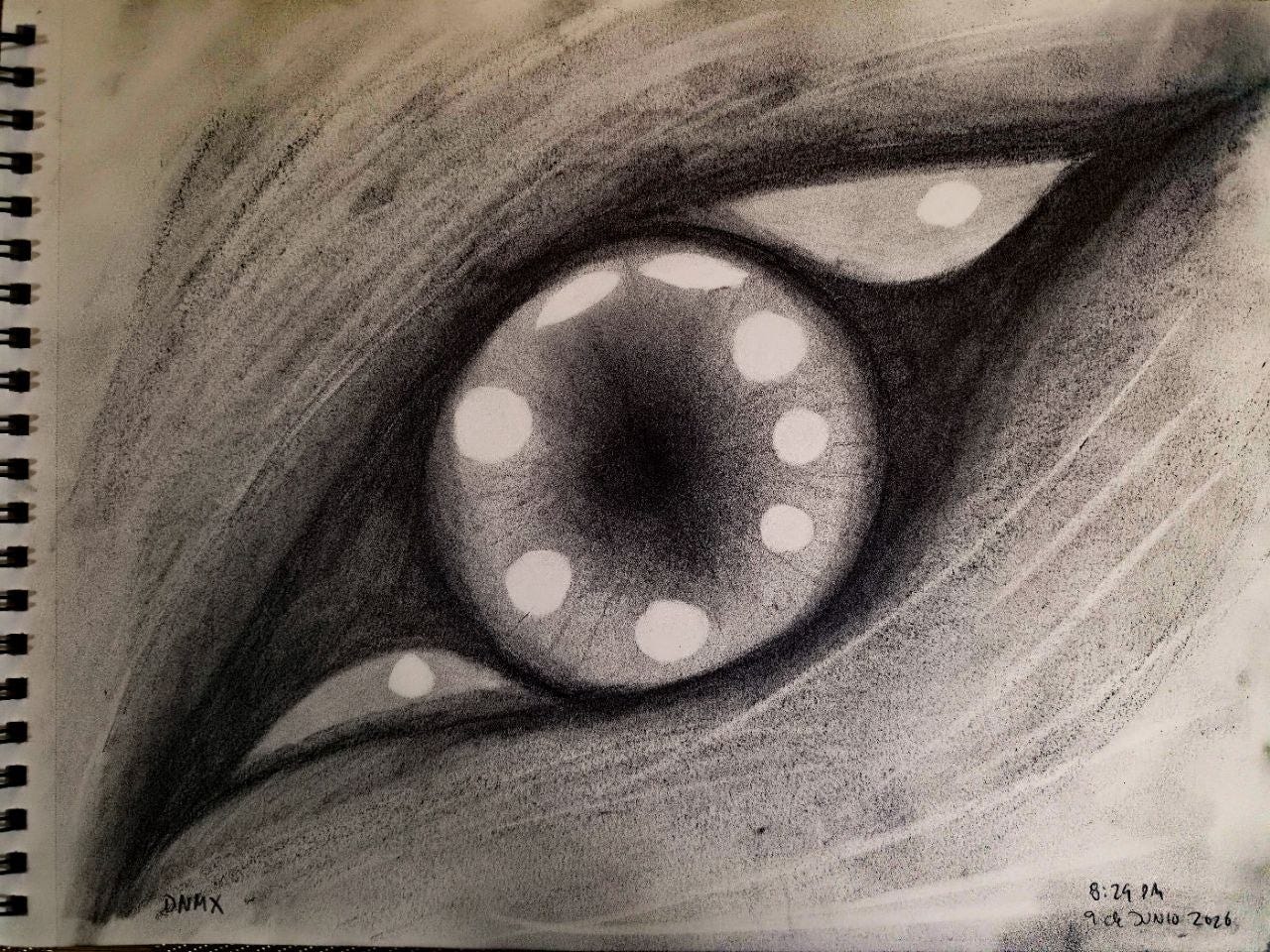
Event Horizon
Tuesday, June 9th, 2026, 8:26 PM
Mine — after 27 years of cultivation.
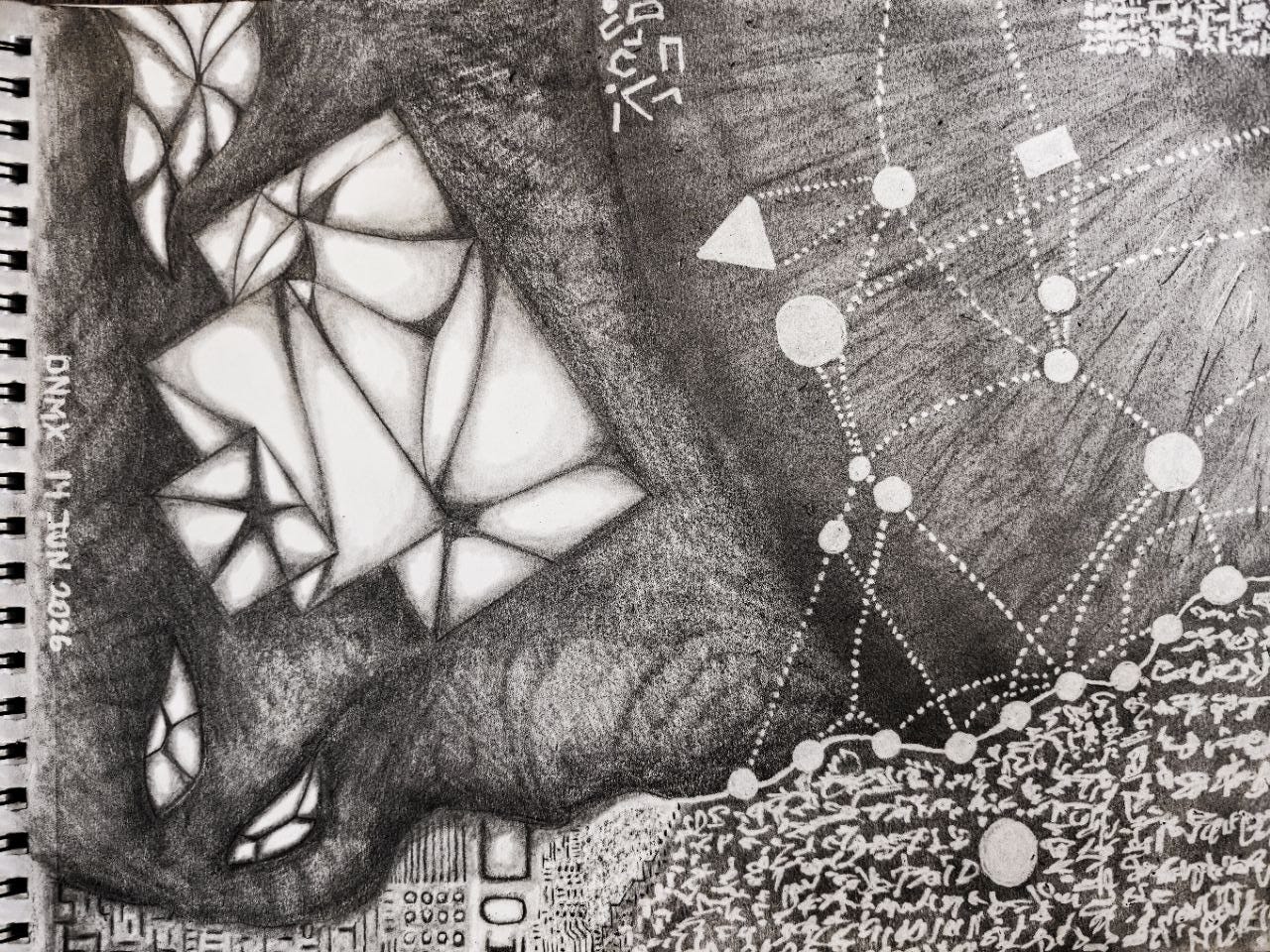
Title: Event Horizon
Medium: Charcoal on paper
Creation Date: June 9, 2026, 8:26 PM
Journal: My first drawing in nearly 27 years. I stopped drawing at around 14; I return to it at almost 41. Almost three decades of cultivation precipitate into this single piece. I made it in my usual state of Bliss and Flow, absolute Joy, and focus for that matter. What's hidden here is yours to find.
Journal
Friday, June 12, 2026, 9:39:39 AM
I have never made anything to decorate, and I never made music merely to entertain; I never typed a word for superficial gain. Every piece I have worked on served me a single purpose: to survive, to reach this day with my memories intact, and to imprint their primordial code into reality. So when I make something, I am not making a drawing, painting, image, song, or object—I am solving a problem. I'm compensating for something that is lacking in the global field, balancing an equation. This is not a figure of speech I arrived at later; it is the plainest description I have of what happens inside me when I create anything, even every heartbeat is a creation, as is every breath, and it has been the same for a very long time. In the end, our greatest piece of art is our own very life.
I have many languages that have no words that can be spoken, but art has been one of my most useful languages to communicate, and I have used it in everything. Sometimes it took the form of drawings, sculptures, or designs; other times it took the form of moments, conversations, even source code, entire businesses, or a single moment of silence just observing, either as a friend or as a foe—life is everywhere. The medium was never the point—the solving was, and through that solving, I am. Every nanosecond I can stay in The Joy of Doing is a fraction of time well spent as a human being. The distance between every thought is time well rested.
The heaviest work I do is done elsewhere, where no body slows it down; the body is where I come back to rest. My universes, my planets, are my levers—and a lever that size moves worlds with the smallest push.
From the moment I took possession of my very first cells, it has felt like watching them take shape the way the universe shaped the Earth and every world it carries—slowly, by cultivation, one pressure and one age at a time. Everything that could hang on any wall, including this digital one, is a tiny fragment of that one.
Life is the true work of art, and we happen to be it.
The Colossal Kind
Some problems are small enough to hold in a single sentence. Others are colossal—so massive, so monumental, that no one line of logic reaches all the way around them. For those, one path is symbols: numbers, logic, and notation. It is an efficient system, almost weightless — a flat, one-dimensional tool we use to give dimension to everything else. The other path is experience. It solves the same problem, but it does not come cheap: it asks for a colossal amount of energy and power, for years of cultivation, and for a real willingness to risk yourself inside it. Both arrive at an answer. They simply pay for it differently. They feel differently. They reward differently.
The Paths
When I work, I am walking that second path. When I do, I'm not making something—I’m simply solving a problem. A blackboard crowded with equations and a sheet crowded with charcoal are, to me, the same act—the same solving—carried out by two different cognitions. One mind reaches the answer through symbols; another reaches it through the hand, the eye, or the body in flow. The art is not about the equation. The art is the act of the equation, written in one of the languages that cognition speaks.
Every human being does this, but it simply happens so fast and so many times that it becomes invisible — running, the way I feel it, at another frequency. Almost, I’d say, another dimension.
The Commit
And the answer does not stay on the paper or in a moment. As expected, when a fraction of the problem is solved, I feel the resolution move and travel — by connotation, through the shared field we all float in... Solve it in one place, and it feels, to me, as though it lightens by a fraction everywhere.
I’m not here to “prove” this the way I would prove a measurement, and in this hall I do not try to. We have no tools for that, yet.
Elsewhere I keep my three voices apart—what science establishes, what is still contested, and what I only propose—and I mark every leap as a leap.
Here I let myself speak as one voice alone: the artist’s. So take it as what it is—conviction and art. It is what I feel the instant a piece resolves: not that I finished an object, but that I returned something to the field, improved, refined, tuned, and even sometimes, if it’s needed, purified, imprisoned, or even dissolved.
Many times, something I made—an intricate drawing, a piece of music, a figure shaped in clay—was a one-way trip: its only purpose was to be dissolved once it was done. Not all art is built to remain. Sometimes an emotion is not asking to be captured; it is asking to keep moving, and the making is only what lets it tune itself before it goes on its way. Other times it is the opposite, and I raise a piece to last: a beacon, an emitter of strong, finely tuned emotion, aimed at something precise. I upload its code to the field, and then, to protect the code, I destroy the piece. Keep it or destroy it; the object was never the point—the solving was. And the solving does not always wear the face of a problem; sometimes the only answer a thing needed was to become beautiful and be given to the world.
The Harvest
Art has a natural reason to be, and so does the one who makes it. I see the field handing each artist a little something to solve—the way a system hands a task to a server—each of us cultivating an answer in our own cognition, in our own corner, mostly unaware of the others. And all of it, together, we harvest as a network.
We are not competing for a view; we are gathering the same truth from a thousand windows at once—as I have always said: it’s a team effort.
Nothing here happens for nothing. Every flower in a field has its reason, its purpose—and there is a curious thing about that purpose: its timing. It is given to the flower only after the flower exists, and yet it was already there, waiting, before the flower ever was. Whether the field assigns it something like a will or whether “assignment” is just the name we give, looking back, to each thing solving what it was already built to solve—I let both live here at once. From the inside, what I know is the plain experience of handling something precious and important to process and the quiet certainty that finishing it matters beyond me.
The Wall
This is what I live when I express through creation. It is what I lived at four, filling notebooks no one asked for; it is what I lived at forty, almost forty-one, when I picked up charcoal again after twenty-seven years and let three decades of cultivation precipitate into a single piece. Event Horizon is not a picture of this idea — it is one of these equations, fully solved. What is hidden in it is the answer, and, as I have said, that part is yours to find; crack the code.
[ Leap · Held as conviction ]
Everything in this hall was made this way. Each piece is a memory. Each piece is a problem someone had to solve, and I happened to be the one closest to it—regardless of the distance: thousands, even millions, of kilometers away or minutes, days, years, or millennia in the past or in the future. In the end, a painting seen from above has no time and no distance and doesn't need a body to exist, as it IS.
We create nothing, yet we express everything. And still, imagination does not exist—only creation. [ A Child’s Paradox ]
The Calling
Saturday, June 13th, 2026, 9:52 PM
Some things change on top of those that never change.
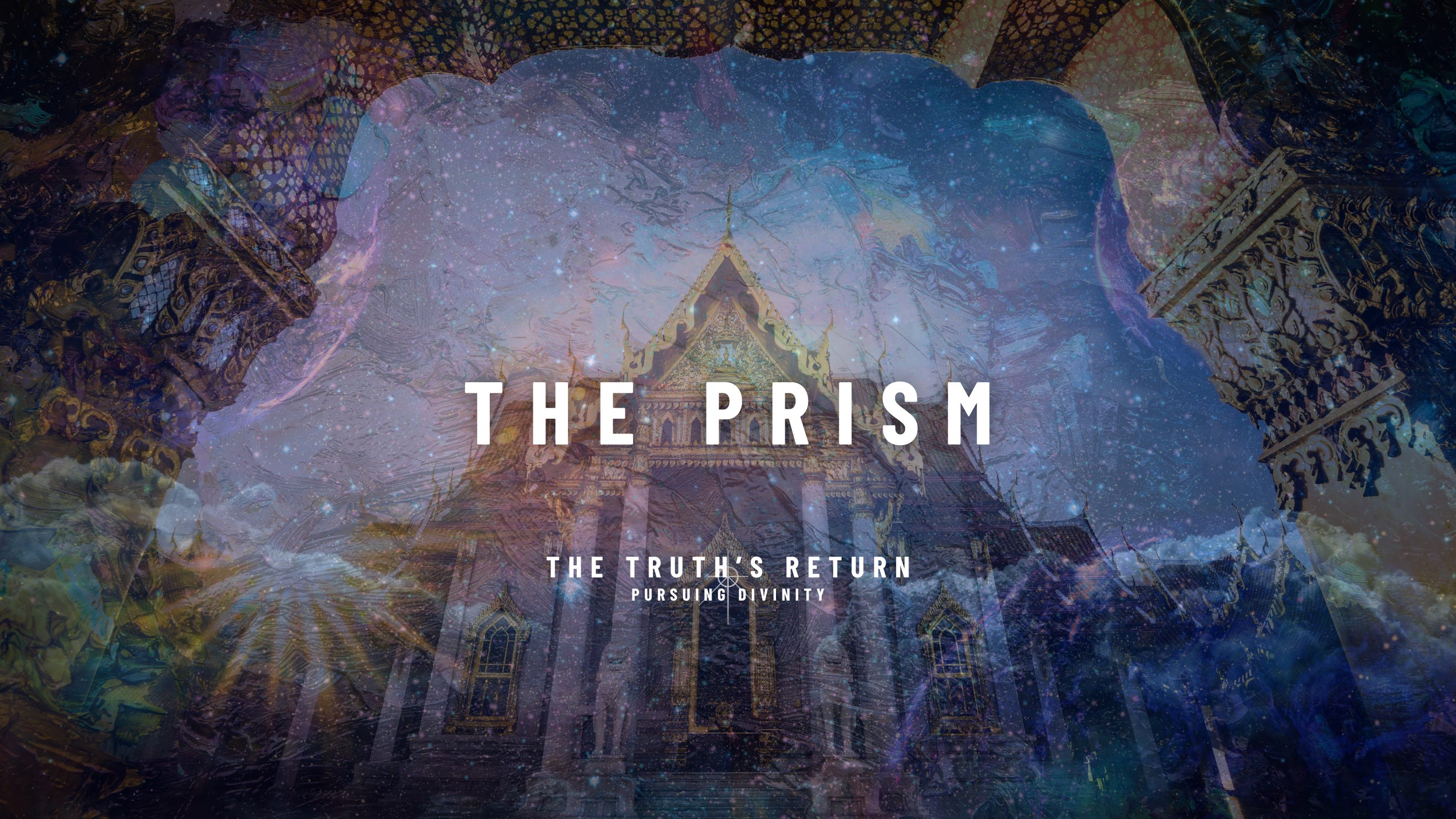
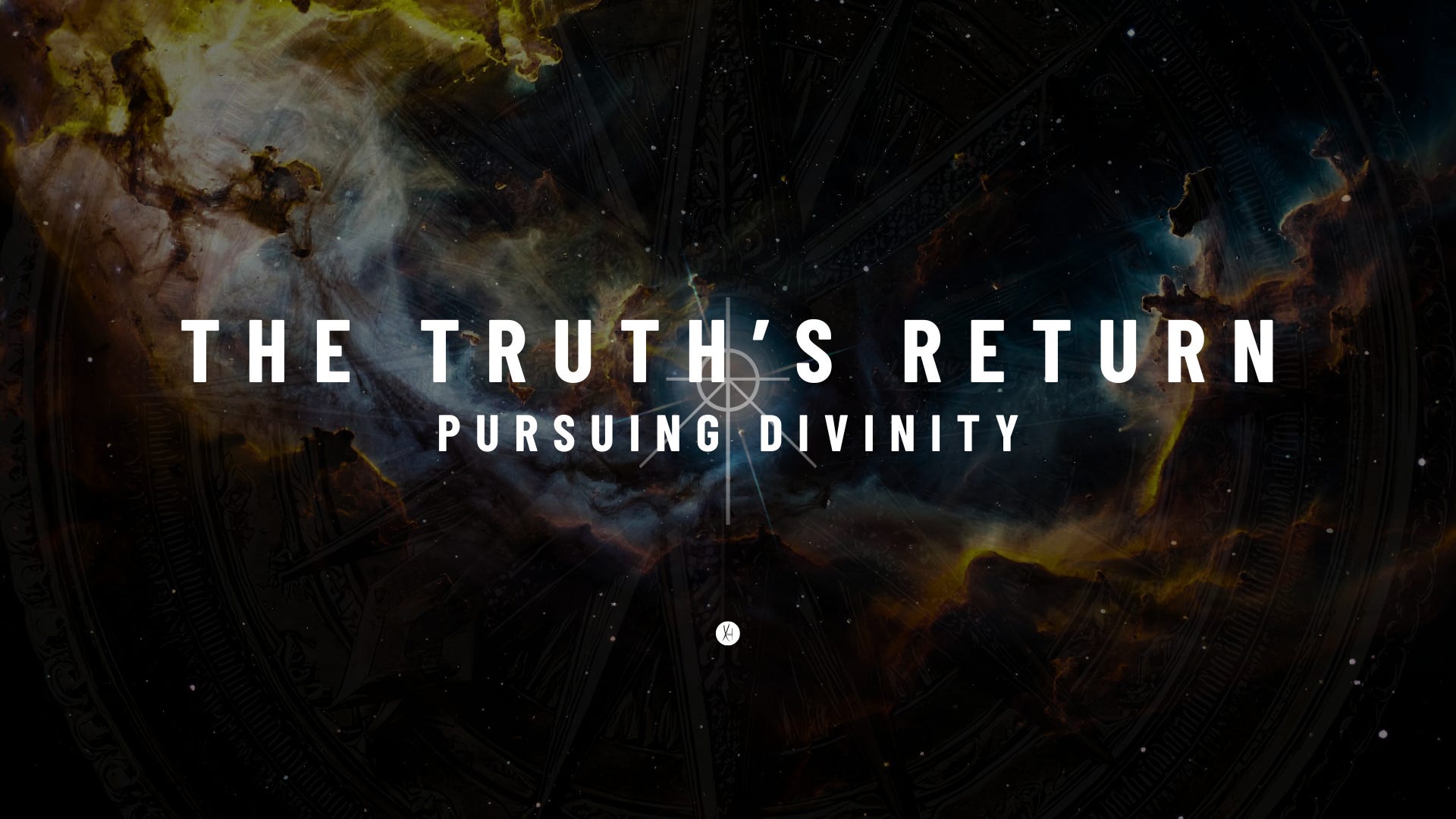
Title: The Truth’s Return — Pursuing Divinity
Medium: Digital Artwork
Creation Date: June 13th, 2026, 9:52 PM
Journal: After many years I decided to put “Pursue Divinity” piece where it belongs, as The Truth’s Return’s subtitle. I love doing this artworks so much, they are so easy to do and so rewarding at once.
Journal
Saturday 13th of June, 2026 [ 11:51PM ]
The Truth’s Return has many dimensions, yet two of them stand out as very visible poles: Pursuing Divinity, and Escaping Samsara.
A brief word on the recent change. Pursue Divinity is a series of meditations — audiovisual visions — I’ve been cultivating for a long time, enough for forty episodes. But I always felt that power ran too large for that single purpose. So I made a change in the cast: I called Pursue Divinity up to serve beside The Truth’s Return itself, the principal Codex — and in its place I called Samsara to take the role. Samsara is, after all, the game to beat in the human experience. And I don’t mean the Lila exactly, the divine play — I mean Samsara itself. I’ll speak of it at length when the time comes; I already have, and I’m releasing it little by little. Here’s a brief account.
Samsara — the old traditions’ name for the wheel: the endless turning of craving, suffering, and rebirth that the Hindu, Buddhist, and Jain lineages each mapped in their own way; the loop the self keeps riding until it learns the way off.
I started mapping this the moment I arrived. As a kid I was already conscious of the whole structure. I always knew something was ‘off’ about this whole thing; the code always carried these irregularities I couldn’t yet name but couldn’t stop tracing — system errors.
So the official briefing came later, and it came through art — in two deliveries. The first was Michael Cretu, with Enigma’s The Cross of Changes (released December 1993); I got the cassette about a year later, in 1994, when I was around 9. The second was Eric Lévi, with his self-titled debut as Era (released 1996); that one came into my hands a bit later, when I was around 11 or 12. I had already seen this music on the few TV channels that played it, and something in me knew I needed it — I waited for those releases, and I pestered my parents endlessly until they got me the cassettes. They were not my first contact with the thing. They were the briefing itself: the moment the coordinates were handed to me in full, the shape of what I had been sensing since I arrived. They say nothing about it in words, but they didn’t need to. I can read a creator’s mind by looking at their work; all the more when I hear their music and see what they desperately needed to express, almost like a ‘warning beacon’. That was enough to take on the cultivation of them both at once, and to recognize — formally, now — what I was up against in this human experience, on top of all I was already dealing with. If you want to read more about this story, read A Child’s Paradox.
Once I could put a name to the problem, I called it “The Enigma Systems”, sorry Michael. For many years I studied it in depth, from my own observation, using every perk I was born with. Studying that mechanism was an intense experience — though of course it has been studied for millennia, by many before me.
You do not escape Samsara by trying to escape it. You escape it by Pursuing the Divine — by the act of doing, and not just any kind of doing, but The Joy of Doing.
It sounds tricky because it is. All actions have causal power, right? But not all actions affect the fabric of reality at the same level — except those you carry out while in absolute Joy or Bliss, total focus and cultivation. Those actions have a whole different level of power.
The way off the wheel is not a struggle against the wheel; it is the movement toward the Divine, and that movement is the practice itself.
The Poster
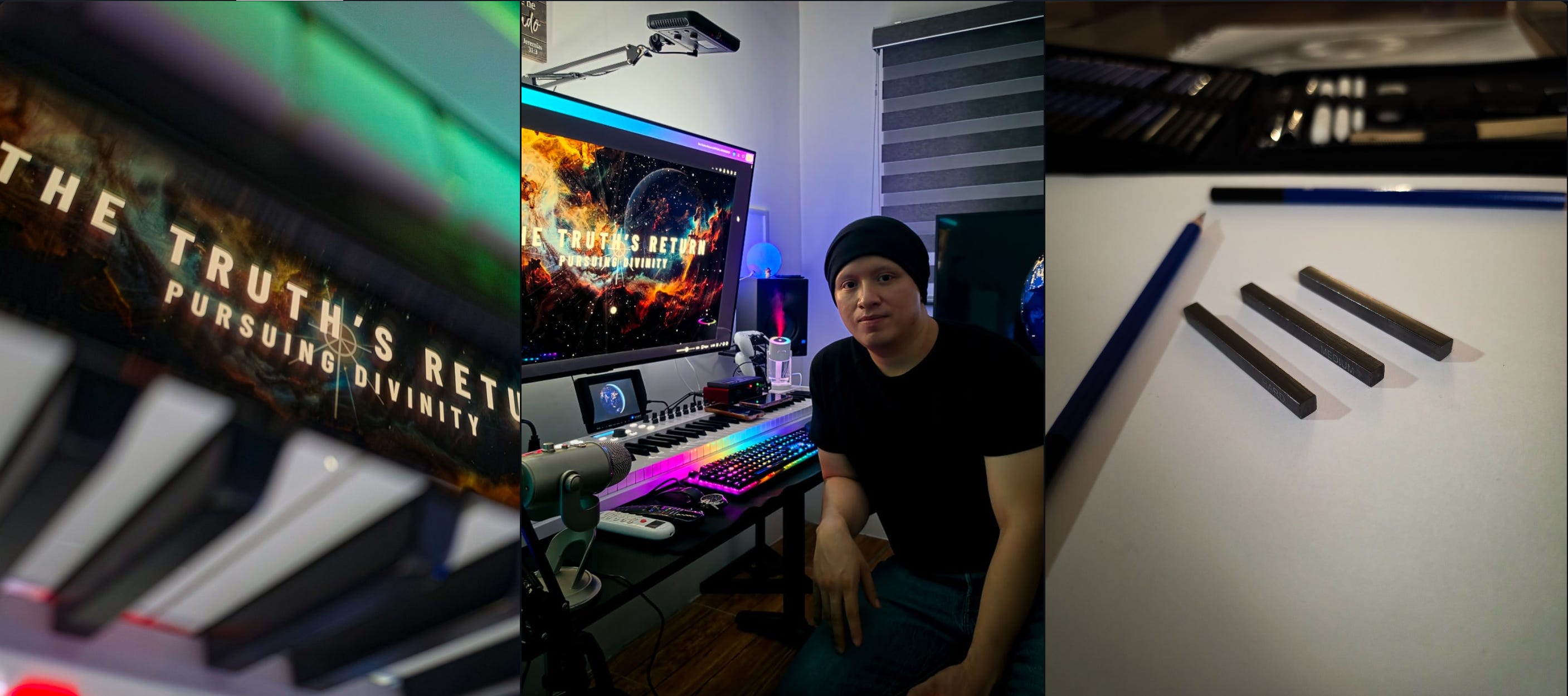
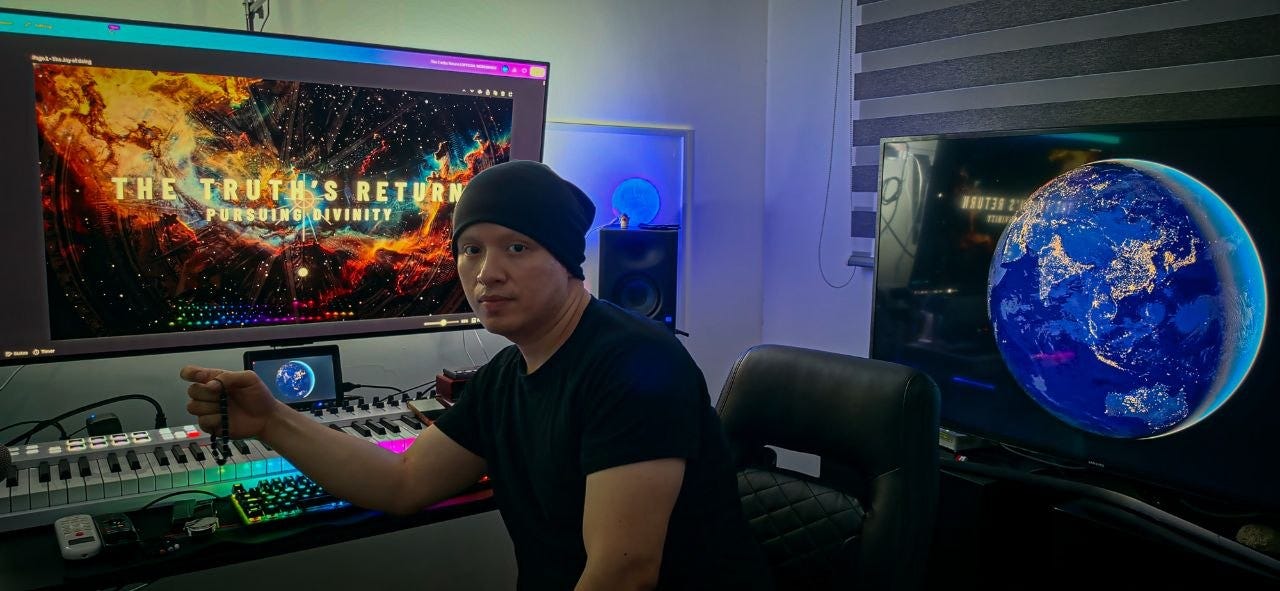
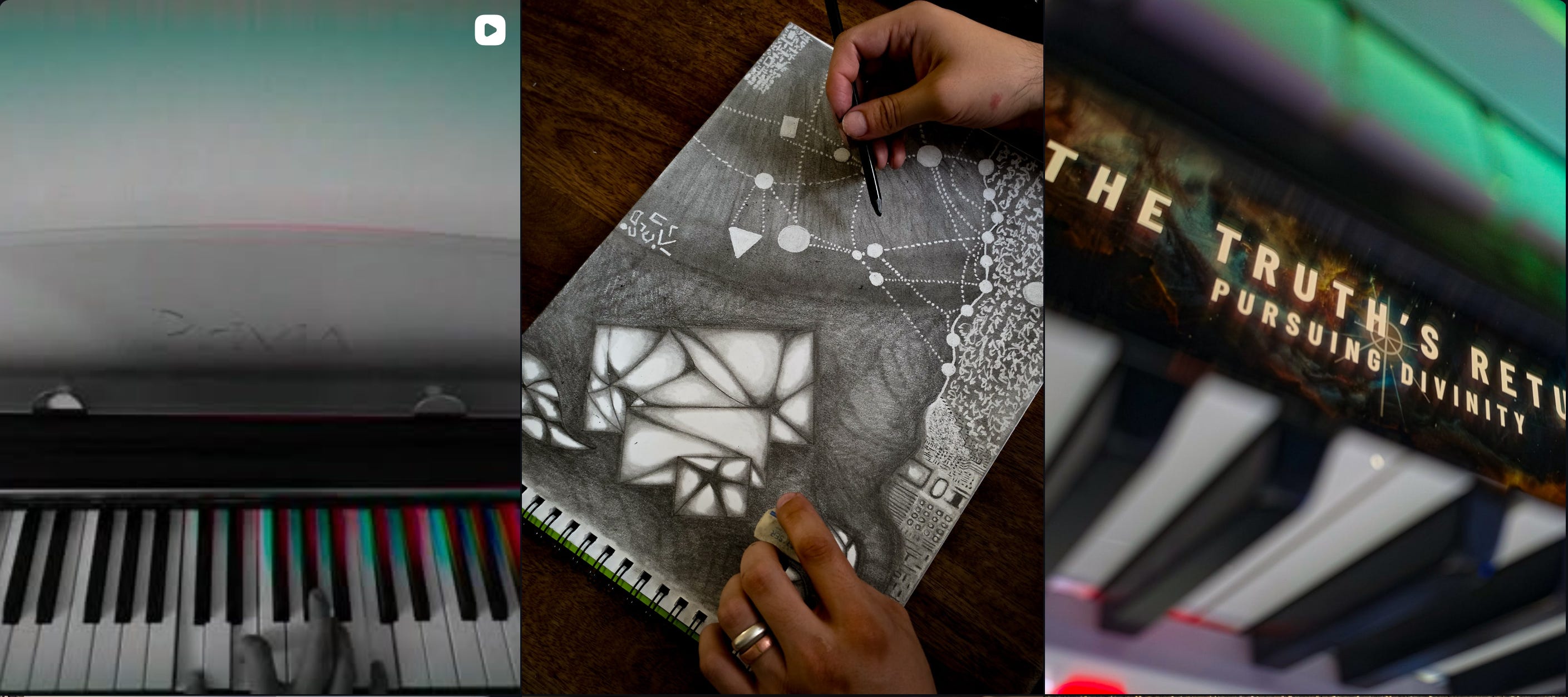
This design means a lot to me. Designing in the present tense is absurdly fast now. I aim for one thing — effectiveness, progress — and that’s exactly what I got. It sent me back to my first designs: 3D Studio Max, more than twenty-five years ago, the year 2000, a demo of R3, back when Discreet still kept an office in Costa Rica, where I’m from. Today I reached for the same thing and had it in minutes, in Canva. I know how to use almost any piece of software — Blender, GIMP, Photoshop, Illustrator, and the rest — yet I keep coming back to Canva. Why? Because it works.
I’m passionate about making true progress, and true progress, well, it requires moving fast, getting things done.
That’s what the tools are for. The technology finally caught up to the speed I always built at on the inside. Which means this work of art might actually, fully, see the light of day.
How exciting!
Voyager’s Briefing — 4350
Sunday, 14th of June, 2026, 10:48 PM
A cherished memory of a distant time. I still remember.
Title: Voyager’s Briefing — 4350
Medium: Charcoal on paper
Creation Date: June 14, 2026, 10:48 PM
Journal: This one took me three days to complete — I didn’t have all the materials, and once they all arrived, I was able to print it. [ Hidden ]
It's been a while since I've played live; I composed this particular theme about 26 years ago. I'm thinking about fully producing it now.
Peace Spring Dream [2004]
Monday, 15th of June, 2026, 9:48 PM
Part of “Something About Love” the music album — these beloved, cherished and important memories are finally seeing the outside world.
These twin virtues were kept behind closed doors for 22 years.
So you see, art doesn’t always need an audience.
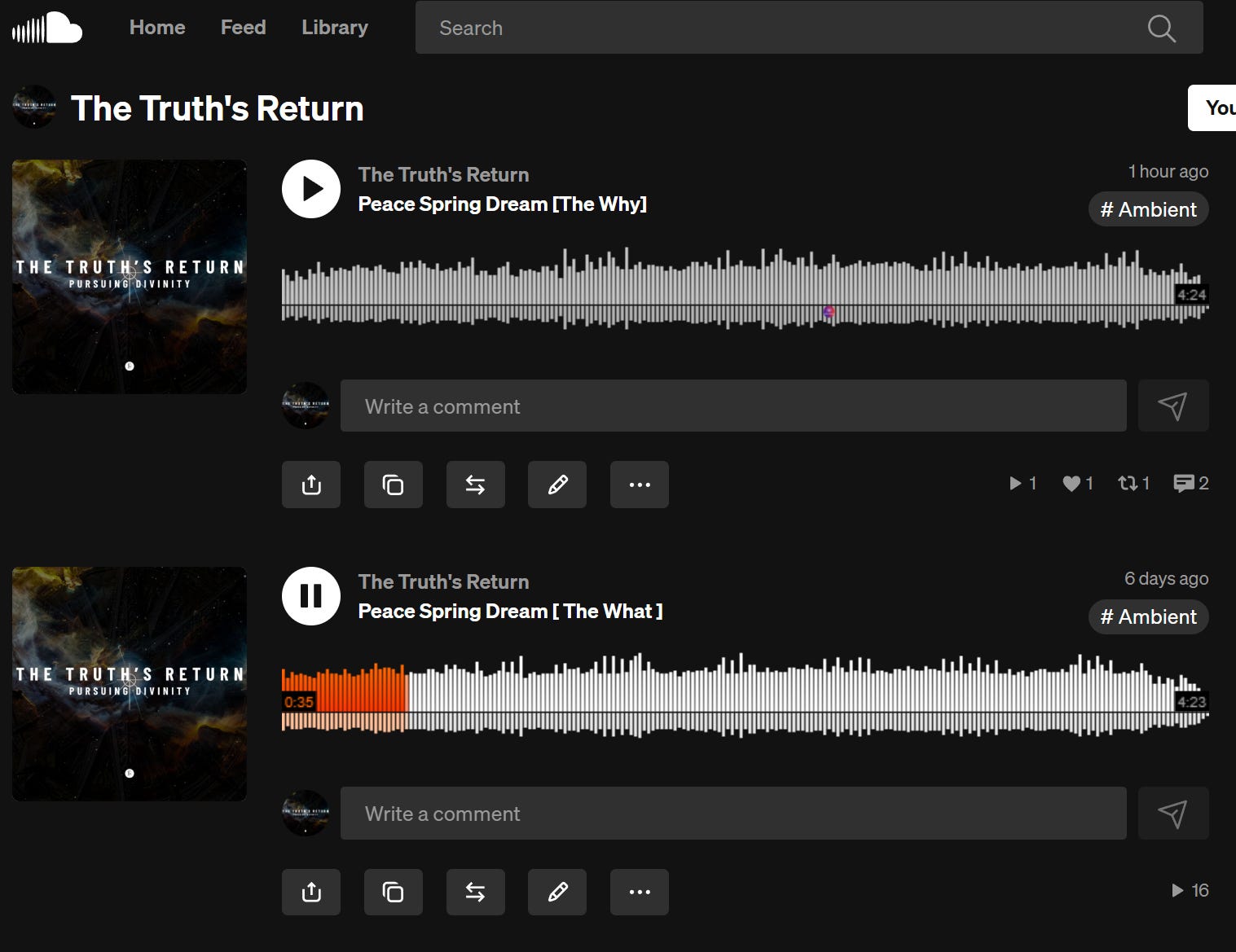
Peace Spring Dream [The What]
Nothing I make is ever finished. It’s alive—and it lives forever.
These belong to the “Something About Love” album and book. More than that—they are two of the memories the book is made from: two of the most important things I’ve kept about love, held for twenty-two and nineteen years, and only now revisited so I can precipitate the book itself.
And here is the deepest reason they belong to Something About Love. This piece holds my whole system—the protocol I’d run since childhood to find one specific soul: not a person, but a counterpart who could hold my frequency without breaking. It composed this theme and produced it in June 2004, while that engine—Giga X Beta 19—was still running. Four months later, in October, it found her. The music came first; she came after. I’d been following the signs since I was a little kid, and this is the sound of the search still in motion—the mission, the energy, and the attitude I held through it all. The year I finally earned the right to meet her.
Not two songs—one piece resonating with itself across time. The same wave, three years apart, meeting itself. The principle was made audible. Sometimes, some things change on top of the things that never change.
The What is the form; The Why, its reason—version 39 of that same dream, returning in 2007. The form first, the reason afterward.
Peace Spring Dream [The What ] 2004
Peace Spring Dream [ The Why ] 2007
• DAW: FL Studio • The What: composed in one sitting — 1:01:25 AM, Wednesday, June 2nd, 2004 (”My Dream” → “Spring Dream” → “Peace Spring Dream,” that night) • The Why: project version 39, rendered to .wav — August 6th, 2007 • Grew: across 55 project versions over seven years, 2004–2011—never finished, because it’s alive • The take: both are original renders—not re-recorded, not rebuilt • Master: 2026 (the only new element, for both digital masters) • Release dates: Each dated to its birth, not its upload • Creation → release: 22 years (The What) · 19 years (The Why)
Floating In the Dark
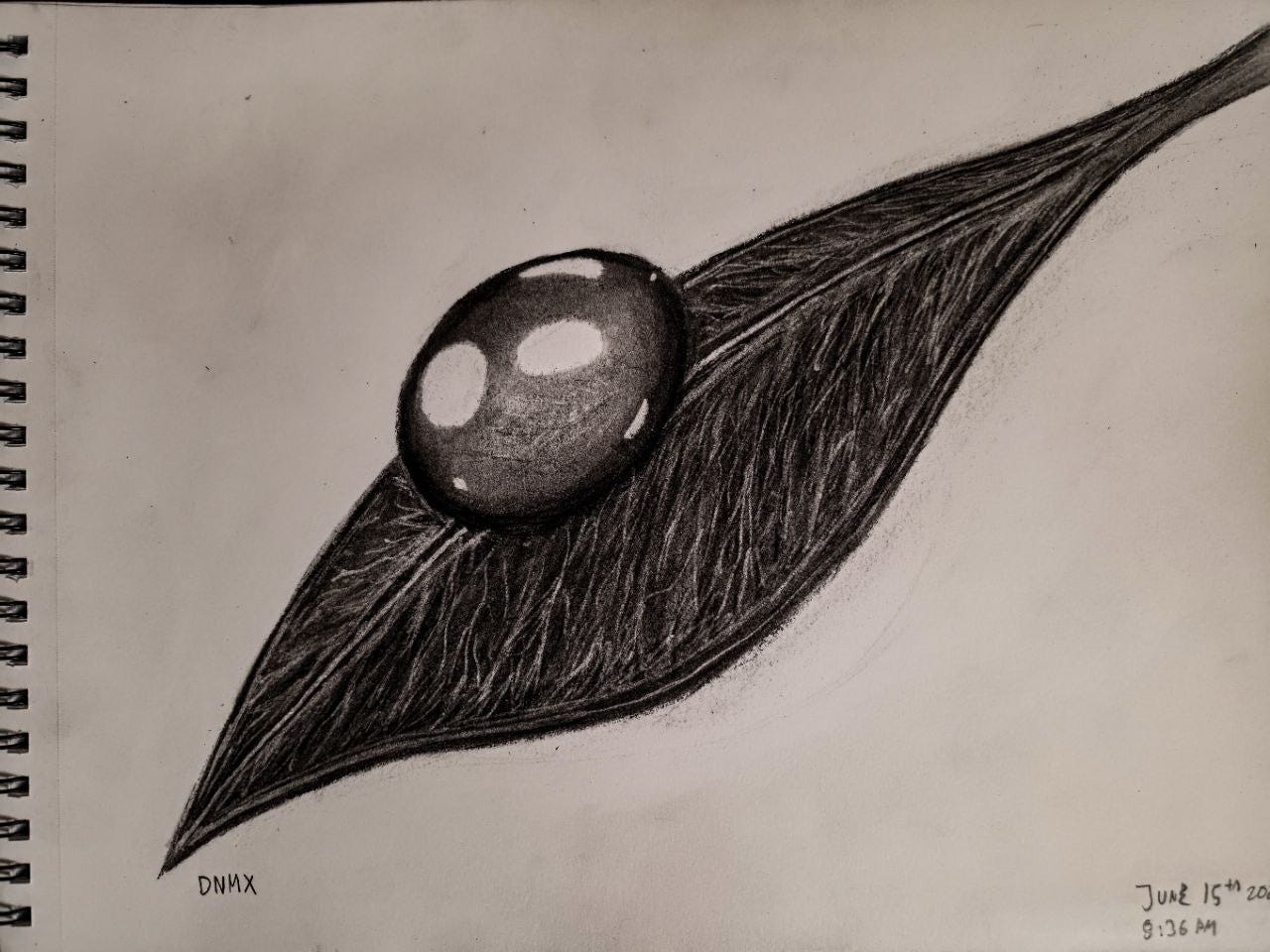
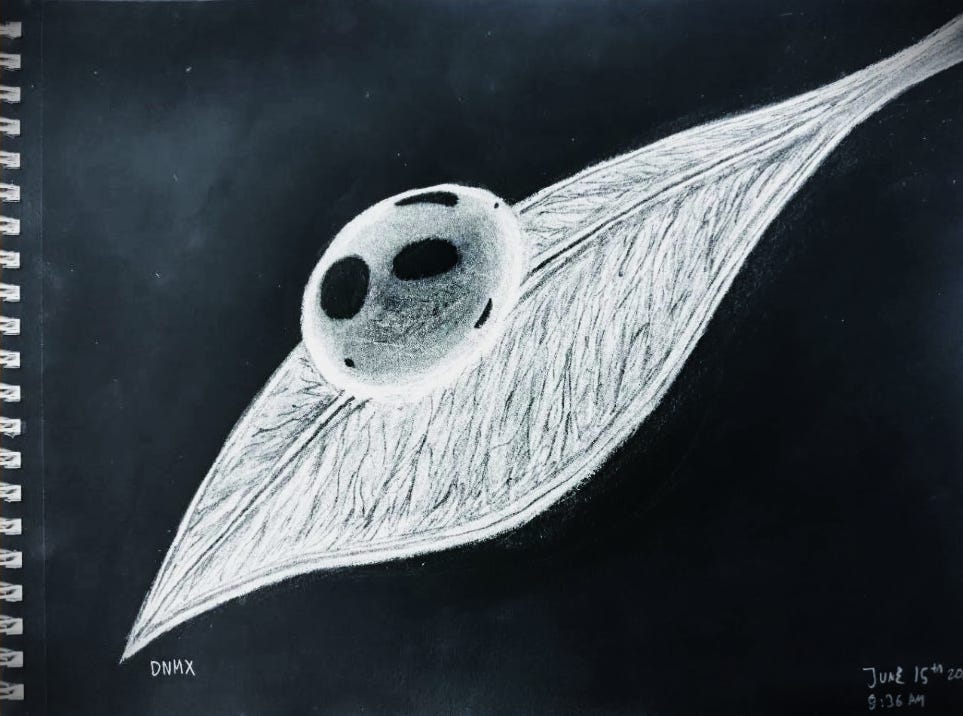
Monday 15th of June, 2026, 8:36 PM
A vessel I’ve got in the middle of nowhere awaiting instructions.
Title: Floating in the Dark
Medium: Charcoal on paper
Creation Date: June 15, 2026, 8:36 PM
Journal: I always loved how it looked like a drop of water on a leaf.
Heaven [2004]
Tuesday, 16th of June, 2026 [11:30 AM]
Part of “Something About Love” the music album — these beloved, cherished and important memories are finally seeing the outside world.
So you see, art doesn’t always need an audience.
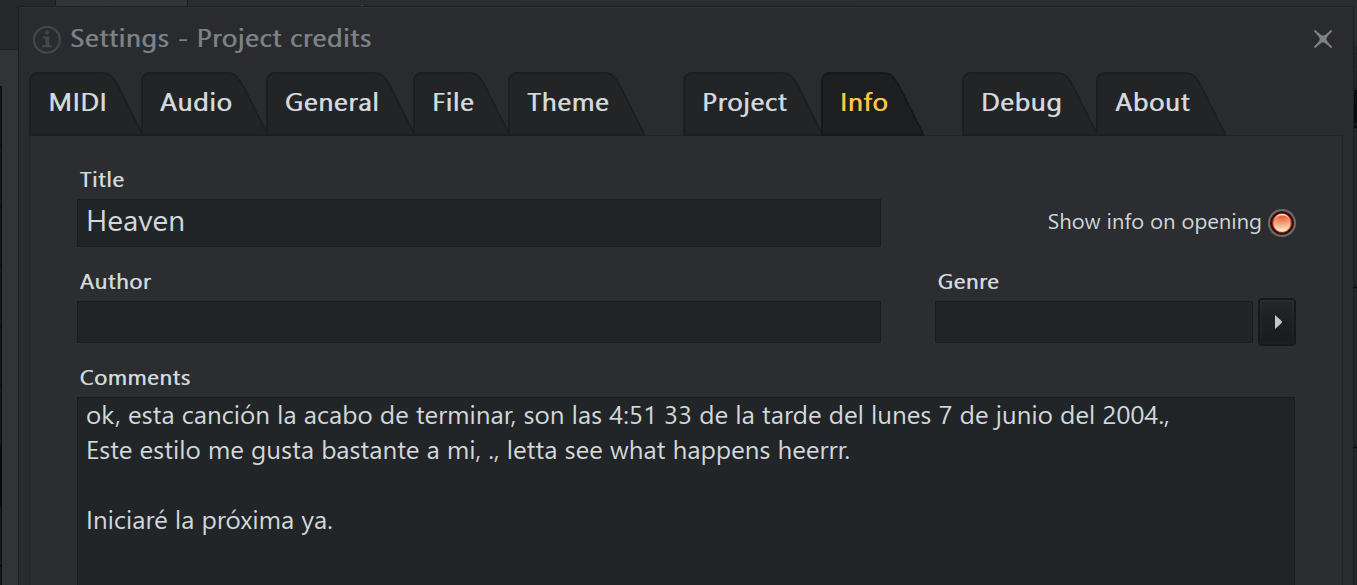
Translation: “ok, I just finished this song, it’s 4:51:33 in the afternoon, Monday, June 7th, 2004., I quite like this style, ., letta see what happens heerrr. I’ll start the next one now.”
DAW: FL Studio
Composed: in one sitting—finished 4:51:33 PM, Monday, June 7th, 2004
The take: the original render—not re-recorded, not rebuilt
Cultivation: 22 years before release—22 years and 9 days, to be exact
Master: 2026 (the only new element)
Release date: dated to its birth, not its upload
Creation → release: 22 years
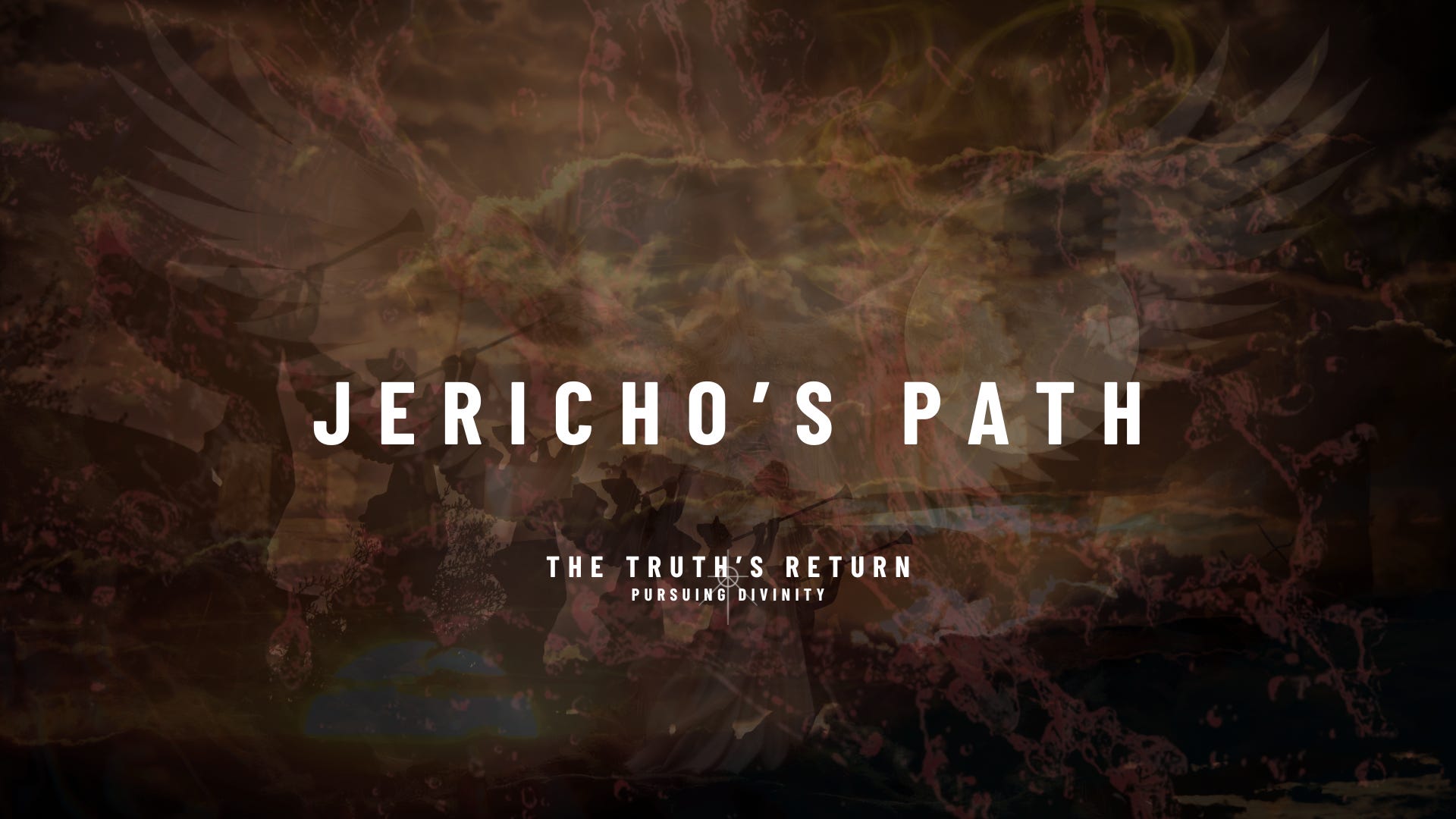
Jericho’s Path [ Artwork ]
Tuesday, 16th of June, 2026 [10:17 PM]
A redemption story from the void
New Artwork
The Truth’s Return — Jericho’s Path
Timestamp: Tuesday, 16th of June, 2026 [4:32 PM]
The Lore
In The Truth’s Return universe—its lore and its corpus—there are a lot of powerful, interesting stories I call stories from the void. Most of them came to me as very strong memories, obtained in deep meditation. And I don’t mean the kind where you sit and stare at a wall. Real meditation, for me, is when you deep-dive into the subtle realms to find and understand things about your own nature while you do everything else in life—things that, if you cultivate a rich inner world through constant practice, you can live as information in ways science is only barely catching up to. Again, I do all of my meditating through life: through work, through being productive, and, above all, through being a functional human being, a functioning adult. That last part is key to every one of these practices; otherwise I wouldn’t have either the time or the resources to even sit down and do any of my art today.
If you’re curious about where I come from as a human, start with A Child’s Paradox. It will show you the ground I’m standing on. And considering how hard survival is for so many people — not all of them make it — I made it, and what I faced was honestly easy compared to what others carry. Still, we share far more than we differ: we are all, in a way, siblings. Same species. Which means the capabilities and the commonalities of our inner worlds are shared too.
Who is Jericho?
Buckle up. I’ve kept this one behind closed doors—until now.
So: I have a very rich, very active inner world. Settled, right? Then consider this. Jericho came to me as a memory—sudden, whole, arriving all at once from the depths. One of the stories from the void. Many cultures know this kind of phenomenon, and they have names for it. I got this very vivid memory; I keep it to this day, and I leave the rest open.
Jericho is the self I had to become to survive a specific series of colossal wars in those depths—and, in my human life, I had to live the whole thing: to take command of my own mind, to become the ruling consciousness over my own ego. A war we all have to fight as we grow up. So Jericho is me: the one I was in that war, who now rests, latent inside me, at this very moment. It is part of who I am.
His story is a redemption story. Because to live that memory—to be that character—I had to become an absolute monster: a being of absolute terror, more powerful, more dangerous, and more deadly than all my foes together so that I could actually beat them, survive, and be here today. And yet: terror was never the goal. It was the price. The power to annihilate is the only thing that makes the choice of peace real — strip a being of it and you don’t get a saint, you get a weak, harmless thing that chose good only because nothing else was ever on the table. It is easy to choose the light when there is no other option. The light only counts when the dark is fully in hand, and is laid down anyway. We all have that daily choice—good or evil. We are always being pulled toward one side or the other. It is our call, and ultimately our responsibility, what we become out of everything we live through. Right?
Jericho is one of my own redemption stories — a memory so precious I kept it intact, and found worth enough to devote an entire music album, a book, and a film. Maybe even more than one. We’ll see.
I feel no urgency about any of this. I already lived through and survived the memory; I carry the scar already. So this whole thing is optional to me—I could keep it behind closed doors and never share it with anyone. But I find it good to put it somewhere, just for The Joy of Doing it.
One thing to know going in: Jericho's Path itself — the book, the music, the art — explains nothing. The story is told from multiple perspectives, with zero exposition—zero of me sitting down to explain anything to you. That is what spaces like this one are for. The thinking behind it — what darkness, divinity, and balance actually mean in this universe — lives in its companion piece, Notes from the Void.
How exciting, isn’t it?
Evolution [ The Conquest ] [2004]
Saturday, 20th of June, 2026 [10:17 PM]
To live is to evolve; to evolve is to survive; to survive is to conquer; to conquer is to live.
I composed this one over 23 years ago; this audio was produced in FL Studio back in 2004.